

Keynotes
Julia Stoyanovich: Follow the Data! Responsible AI Starts with Responsible Data Management (Keynote 1)
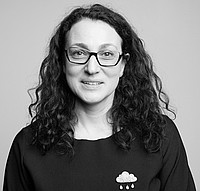
Abstract: Incorporating ethics and legal compliance into data-driven algorithmic systems has been attracting significant attention from the computing research community, most notably under the umbrella of fair and interpretable machine learning. Yet, much of this work has been limited to the "last mile" of data analysis, disregarding both the data lifecycle, and the lifecycle of a system's design, development, and use. In my talk, I will argue that the decisions we make during data collection and preparation profoundly impact the robustness, fairness and interpretability of the systems we build, and that our responsibility for the operation of these systems does not stop once they are deployed. I will discuss technical work, and will place this work into the broader context of policy, education, and public outreach.
Bio: Dr. Julia Stoyanovich is Institute Associate Professor of Computer Science and Engineering, Associate Professor of Data Science, Director of the Center for Responsible AI (r-ai.co), and member of the Visualization and Data Analytics Research Center at New York University. She is a recipient of the Presidential Early Career Award for Scientists and Engineers (PECASE), a member of the Computing Research Association (CRA) Future CRA Leaders Program, and a Senior member of the Association of Computing Machinery (ACM). Julia’s goal is to make “Responsible AI” synonymous with “AI”. She works towards this goal by engaging in academic research, education and technology policy, and by speaking about the benefits and harms of AI to practitioners and members of the public.
Julia’s research interests include AI ethics and legal compliance, and data management and AI systems. In addition to academic publications, she has written for the New York Times, the Wall Street Journal, the LA Times, The Hill, and Le Monde. Julia has been teaching courses on responsible data science and AI to students, practitioners and the public. She is a co-author of the “Data, Responsibly” and “We are AI” comic book series for the general audience. Julia is engaged in technology policy and regulation in the US and internationally. She received her M.S. and Ph.D. degrees in Computer Science from Columbia University, and a B.S. in Computer Science and in Mathematics & Statistics from the University of Massachusetts at Amherst. Julia’s work has been supported by the US National Science Foundation, Pivotal Ventures and Meta Responsible AI, among others.
Alexander Böhm (SAP): Tackling the Data Management Challenges of Modern Business Applications (Industry Keynote)
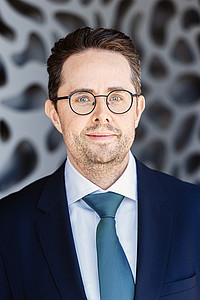
Abstract: Modern business applications present a wide range of requirements to database management systems. This ranges from big data processing applications that routinely deal with petabytes of data, over transactional processing systems with low-latency requirements, to HTAP and multi-model systems with highly diverse query workloads and data types. With the shift to cloud-based infrastructure, the expectations of applications have only increased. This includes high-availability across regions, vertical and horizontal scalability, serverless deployments, seamless integration across different data management solutions, security features such as customer-managed encryption keys, and reduced total cost of ownership (TCO), to only name a few.
In this talk, we discuss how a modern database management system can tackle these requirements using SAP HANA Cloud as a running example. We highlight how to give applications the opportunity to pick the right cost/performance tradeoffs for their data management challenges, deal with the security and isolation requirements of hundreds of thousands of tenants, and dynamically scale the system in case of load spikes of workload shifts.
Bio: Alexander Böhm is a Distinguished Engineer at SAP and one of the chief architects for the SAP HANA database management system.
His specific focus is on system performance and core database topics. He drives strategic, tactical, and operational projects, including design
and architectural changes of the database kernel for key stakeholders, i.e. SAP S/4HANA. Additionally, he is overseeing the evolution of the HANA
core database management system with respect to novel hardware and technology as well as cloud-based system deployments.
Before re-joining SAP in 2024, Alexander was a Principal Engineer at Google Cloud and the Uber-Techlead for Google's AlloyDB for PostgreSQL system.
Kai-Uwe Sattler Modern Hardware – Why should we care about it in Database Research? (Closing Keynote 2)
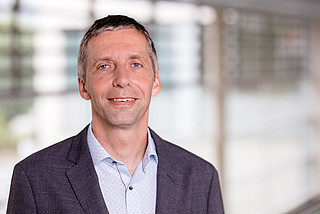
Abstract: Data management is a core component of many applications and modern IT stacks, even in times where cloud computing, data science, machine learning and AI receive more attention.Its role has evolved beyond the fundamental task of providing efficient and transparent access to large datasets. It now encompasses a growing number of systems and solutions tailored to specific application domains, data types and particularly new hardware such as network, storage and memory technologies, and accelerators.
In this talk, we will argue that novel and emerging hardware technologies present significant challenges and opportunities for database research. Drawing upon our experiences in the SPP 2037 priority program, we will provide an overview of relevant technologies for data management and discuss the merits and challenges of research in this field.
Bio: Kai-Uwe Sattler leads the Database and Information Systems group at the Department of Computer Science and Automation of the TU Ilmenau, Germany. He received his Diploma (M.Sc.) in Computer Science from the University of Magdeburg, Germany. In 1998, he received his Ph.D. in Computer Science (magna cum laude) from the same university.
From 1998 to September 2003 he was a member of the Database research group (head: Prof. Gunter Saake) at the University of Magdeburg. From October 2001 until March 2002, he worked as a visiting assistant professor at the UC Davis, U.S.A. During summer term 2002 he held a replacement professorship at the TU Dresden and during winter term 2002/3 at the University of Halle.
In June 2003, he received his Habilitation (venia legendi) in Computer Science from the University of Magdeburg. He joined the Department of Computer Science and Automation of the TU Ilmenau in October 2003 as Professor.
Kai-Uwe Sattler served as Dean of the Department from 2011 to 2017. From June 2017 to 2020 he served as Vice President for Research.
In December 2020 he was elected as President of the TU Ilmenau.
From 2017 to 2024 he was also the coordinator of the priority program "Scalable Data Management for Future Hardware (SPP 2037)" funded by the DFG.